

Every time I sit down to dissect the structure behind an online casino, I find myself peeling back layers of technology that the majority of players never see. The Spanish market has matured a lot over the last decade, and with that evolution comes a much more sophisticated consumer base. I’ve devoted time evaluating platforms, studying audit certificates, and conferring with compliance teams across Europe, and I can assure you that modern casino security is a far cry from chaos some commentators still portray it as. Platforms that operate legally in Spain, including established names like Quickbet casino, are bound by protocols that would rival the security frameworks used by major financial institutions. Yet fallacies persist, and uncertainty remains prevalent. My objective here is to eliminate the jargon and give you an frank, detailed analysis of what actually ensures your data, your money, and your gameplay protected. I’ll take you through the technical protections, the regulatory landscape in Spain, and the practical steps you can implement to verify that a platform is secure before you ever make a bet.
Methods by which Encryption Safeguards Your Data from Prying Eyes
Encryption is the unsung workhorse of online casino security. I consistently start my evaluations here because nothing else matters if the data pipeline is compromised. In practical terms, any reputable platform accessible to Spanish players depends on Transport Layer Security, commonly seen as the padlock icon in your browser. That icon is not decorative; it signals that every piece of information flowing between your device and the casino’s servers is scrambled into ciphertext that would take even the most advanced computing clusters billions of years to brute-force crack. I pay close attention to the specific encryption standard deployed. The industry baseline is now TLS 1.3 with 256-bit AES encryption, the same standard government agencies and global banks use to secure classified and financial data. When I test a platform, I also check whether it enforces HTTPS across every single page and API endpoint, because partial encryption is basically no encryption at all. A casino that only secures its payment page but leaves the login form exposed is one I’d walk away from immediately. Spanish consumers are increasingly tech-literate, and they deserve to know that the best platforms encrypt everything from the moment you land on the homepage to the instant you close your browser tab.
The fallacies That Undermine Player Confidence
Despite the extensive technological and regulatory safeguards I’ve described, I still run into lingering myths that distort public perception of online casino security. The most common one I hear is that platforms can control individual outcomes in real time to prevent players from winning. Having examined RNG architecture and certification processes directly, I can say that this is technically impossible on any duly licensed platform. The RNG doesn’t know who is playing, how much they’ve wagered, or whether they’re winning or losing. Another myth that annoys me is the belief that a casino displaying a licence badge is automatically trustworthy without further scrutiny. I always verify licence numbers directly with the issuing regulator rather than relying on a website graphic that could be copied. Some players also assume that because a platform operates a Spanish-language website and accepts euros, it must hold a Spanish licence, which is gravely incorrect. Only a direct check with the DGOJ registry confirms legal status. I’ve also heard the claim that mobile casino apps are inherently less secure than desktop sites, which ignores the fact that well-engineered apps often benefit from device-level security features such as biometric authentication and sandboxed application environments that browsers cannot match.
The reason Identity Verification Is a Non-Negotiable Shield
es.wikipedia.org Know Your Customer protocols, universally referred to as KYC, trigger more irritation among gamers than almost any other security protocol, yet I regard them crucial. The KYC process necessitates users to submit proof of ID, typically a passport or national ID card, along with proof of residence and sometimes proof of payment method ownership. I understand why this feels intrusive, but when you analyze what KYC actually prevents, the rationale becomes irrefutable. These checks prevent underage gambling, remove identity theft risks, curb money laundering, and make sure that only the account holder can start withdrawals. Spanish rules, in line with broader EU anti-money laundering directives, make KYC mandatory for all licensed platforms. From my analytical perspective, a platform that takes KYC rigorously is one that takes its legal obligations earnestly, and that correlates strongly with overall trustworthiness. Quickbet casino and similar regulated providers serving Spain have streamlined their KYC procedures significantly in recent periods, with many now offering automated document verification that finishes in minutes rather than days, preserving security without sacrificing user experience.
Payment Security Is Where Confidence Is Established
Money movements are the moment of highest friction in any player’s experience, and I’ve always believed that a casino’s transaction system tells you more about its security framework than any marketing claim ever could. When I make a deposit, I want to see several levels of protection working together. The first is PCI DSS compliance, a global standard that regulates how cardholder data is kept, sent, and managed. No platform should ever retain your full card number on its own servers without tokenisation, and I actively confirm this when assessing a casino’s payment infrastructure. The second layer involves the payment processors themselves. Trustworthy platforms integrate with established services that offer their own fraud detection systems, which scrutinize transaction trends in real time and flag suspicious activity before funds change hands. Spanish players gain from the broad accessibility of trusted local payment options, including bank transfers through entities regulated by the Banco de España, as well as widely used digital accounts. Here are the payment security indicators I always seek when reviewing a platform:
- PCI DSS Level 1 accreditation, the top compliance level for payment data security
- Connection to regulated payment providers that offer built-in fraud oversight
- 2FA requests for withdrawal requests above a certain amount
- Transparent, written rules on how long financial data is stored and when it is purged
- Availability of local Spanish payment options that carry their own regulatory safeguards
The withdrawal process, in specific, tells me everything I need to know about a platform’s commitment to security. Platforms that process payouts swiftly while still carrying out thorough verification checks show that their security system is both solid and well handled. I’ve come across platforms that delay withdrawals for weeks under the guise of security inspections, and in my view, that’s almost always a red indicator indicating liquidity problems rather than genuine care. A secure, well-capitalised provider should be able to authenticate your identity and complete your withdrawal within a clearly stated timeframe, and the best ones catering to the Spanish market consistently fulfill that criterion.
Responsible Gaming Tools Are Protective Features Too
I’ve long contended that responsible gaming systems should be classified under the security banner, because they safeguard players from risk in ways that are just as important as encryption or fraud detection. Spanish laws require licensed operators to offer deposit limits, session time reminders, self-exclusion choices, and reality checks that notify players how long they’ve been active. When I evaluate a platform, I search for how effortlessly these tools are incorporated. A casino that hides its responsible gaming page three menus deep is showing that player welfare is an secondary concern, and I take that into account in my overall security evaluation. The best implementations I’ve seen make limit-setting part of the registration process, present clear entry to account controls from the main interface, and offer direct links to Spanish support organisations such as FEJAR, the Spanish Federation of Rehabilitated Gamblers. I believe that true security reaches beyond protecting data and assets; it includes the structural protections that stop players from experiencing gambling-related harm. Platforms that adopt this mindset tend to perform better across all other security indicators as well, because the underlying commitment to player protection runs through the entire operational ethos.
Spanish Regulatory Framework Sets a High Bar
The regulatory landscape in Spain is, in my evaluation, one of the most well-defined in Europe. The Dirección General de Ordenación del Juego functions under the Ministry of Consumer Affairs and wields substantial enforcement power. I’ve tracked the development of Spanish gambling law closely, and the 2011 Gambling Act, supplemented by subsequent royal decrees, formed a licensing framework that provides little room for ambiguity. Any casino that wishes to legally accept Spanish players must hold a licence granted directly by the DGOJ, and that licence is not granted lightly. Operators undergo to exhaustive background checks, financial audits, technical system reviews, and ongoing reporting requirements. I also remark that Spain keeps a registry of licensed operators that is publicly accessible, meaning any player can verify a platform’s legal status within minutes. The DGOJ has displayed a readiness to issue substantial fines against operators that breach advertising rules, fail to implement adequate player protection measures, or infringe data handling standards. For me, this active enforcement fosters an atmosphere where security is not merely a commercial distinction but a legal requirement supported by genuine consequences.
Number Randomisers and the Fairness of Every Spin
Equity in casino games hinges on one key piece of software: the random number generator, commonly called RNG. I’ve examined RNG certification reports from laboratories across Europe, and I can verify that the thoroughness applied to these audits is exceptional. An RNG isn’t merely a piece of code that generates random numbers; it’s a complex algorithm that must generate sequences that are both statistically random and unpredictably non-repeating. Independent testing houses such as eCOGRA, iTech Labs, and Gaming Laboratories International submit these systems to billions of simulated rounds, evaluating distribution patterns, streak behaviour, and seed integrity. When I see a platform displaying a certification badge from one of these organisations, I recognise the RNG has passed tests far more rigorous than anything a player could witness during normal gameplay. For Spanish players, RNG integrity is vital. The Dirección General de Ordenación del Juego, Spain’s regulatory authority, requires that licensed operators use certified RNG systems, and failure to comply leads to swift licence revocation. Trustworthy platforms make their RNG certificates publicly visible, and I always advise checking for them before making a deposit.
Identifying a Safe Platform Prior to You Deposit
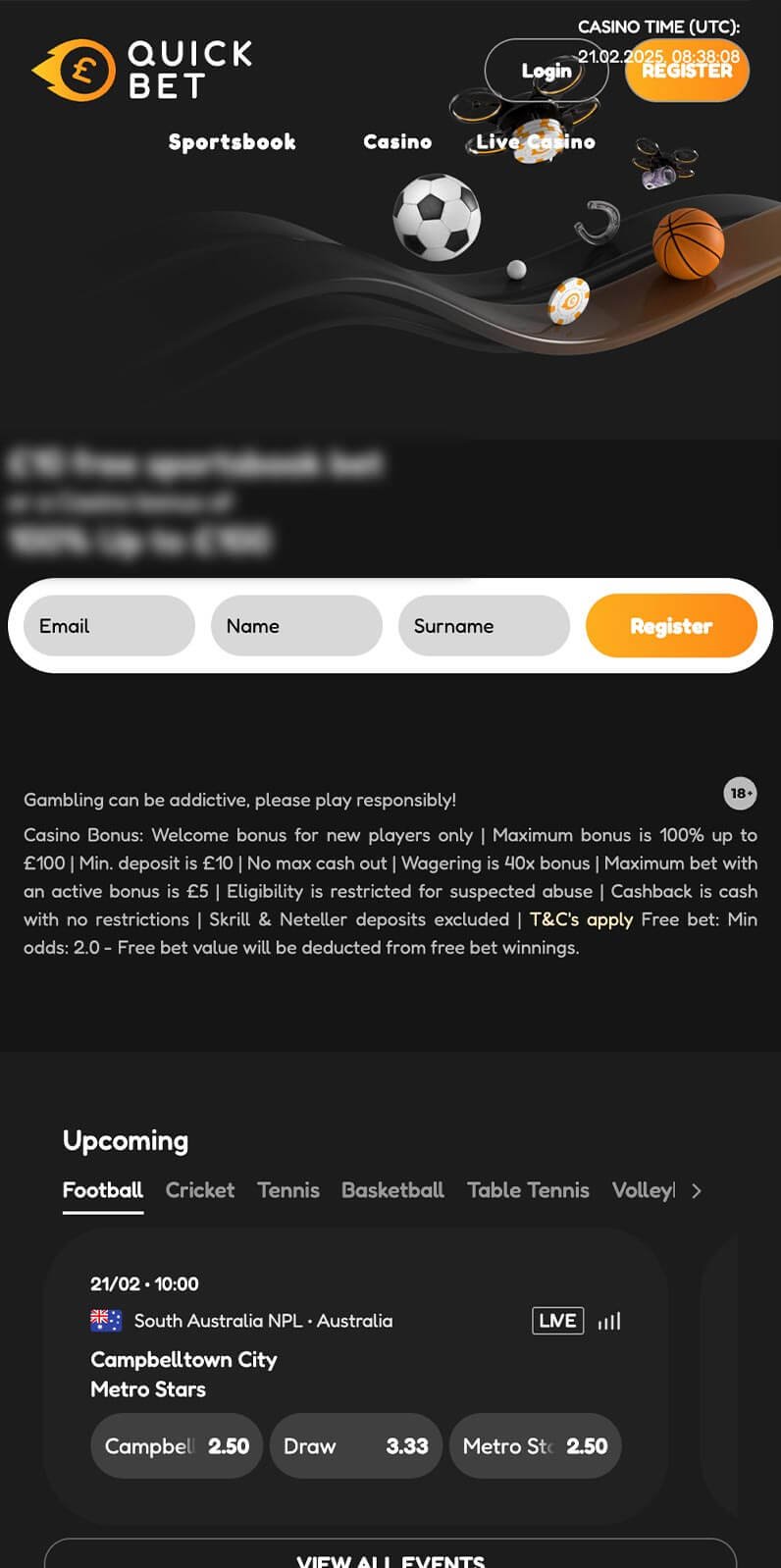
After years of reviewing online casinos from every angle, Quickbet tragamonedas populares, I have developed a personal checklist that I run through before I ever consider funding an account. I commence with the regulatory licence, verifying it on the official DGOJ website if the platform targets Spanish players. Next, I check for the TLS certificate and confirm it’s valid and issued by a reputable certificate authority. I then look for RNG certification badges, which should be clickable and lead to authentic audit reports hosted on the testing laboratory’s domain. Payment partner logos should also be present and verifiable. Beyond these technical markers, I review the privacy policy in detail, looking specifically for language about data retention, third-party sharing, and GDPR compliance, since Spanish residents are protected under both Spanish data protection law and the broader EU regulatory framework. I also place considerable weight on operational transparency. Platforms that clearly publish their withdrawal timeframes, fee structures, and complaint resolution procedures win my trust far more quickly than those that obscure these details behind vague marketing language. When a platform like Quickbet casino makes its security credentials visible and verifiable, it sends a powerful signal that it welcomes scrutiny rather than fearing it, and that’s exactly the posture I look for in an operator worth recommending.
Protection in the online casino space isn’t a binary state of secure or insecure; it’s a layered structure built from encryption, certification, regulation, and operational transparency. I’ve taken you through the technical realities of data protection, the rigour behind RNG auditing, the critical role of Spain’s regulatory framework, and the practical steps you can take to verify a platform’s claims independently. What becomes clear to me after all this analysis is that secure operators don’t hide behind complexity; they invite examination and make their credentials accessible. The Spanish market, with its strong regulatory oversight and increasingly informed player base, continues to push the industry toward higher standards, and that helps everyone who appreciates a wager with the peace of mind that their data, funds, and wellbeing are being taken seriously.